


Origins in Ancient Asia
The roots of rice liquor trace back to Asia’s early experiments with fermentation and distillation. By the late 14th century in China, people had discovered that rice wine could be distilled into something stronger—what became known as baijiu.
As this innovation spread across the region, Vietnam, with its abundance of fragrant sticky rice from the Red River Delta, naturally adapted the method. Instead of sorghum, the Vietnamese used rice, crafting a smoother, subtler spirit uniquely their own: rượu gạo.
A Spirit of the
VILLAGES
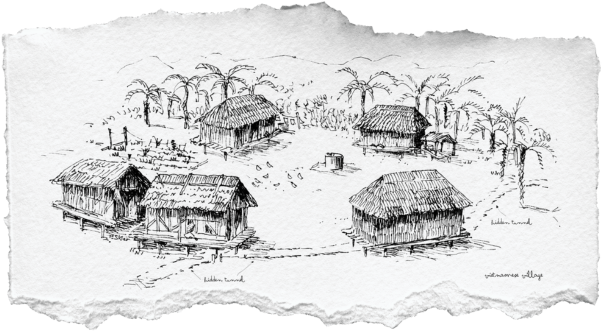
Drawing by Ellen Sklar
From its earliest days in Vietnam, rượu was more than alcohol—it was part of daily life and community. Every village developed its own recipe, handed down through generations, giving rise to countless variations in taste and aroma. Folk poetry and songs often immortalized rượu:
“The Vân village’s rượu intoxicates without drinking…”
“Ngâu village’s rượu jar, Tó village’s buffalo rice cake.”
Production was often managed by women, and rượu existed both as a celebratory drink for family gatherings and as a by-product of farming life. Fermented rice mash would be distilled into liquor, while leftovers fed livestock. Villages like Phú Lộc became famous for their refined techniques, even winning exemptions from royal restrictions under the Nguyen dynasty.
“The Vân village’s rượu intoxicates without drinking…”
“Ngâu village’s rượu jar, Tó village’s buffalo rice cake.”
Production was often managed by women, and rượu existed both as a celebratory drink for family gatherings and as a by-product of farming life. Fermented rice mash would be distilled into liquor, while leftovers fed livestock. Villages like Phú Lộc became famous for their refined techniques, even winning exemptions from royal restrictions under the Nguyen dynasty.
Colonial Control & Industrialization
In the 19th century, rượu’s fate shifted under French colonial rule. The colonial administration saw in it a source of revenue and imposed strict monopolies. Industrial factories, led by French entrepreneurs, mass-produced tasteless ethanol under the name rượu tỵ. Vietnamese families were forbidden from making their own; punishments were harsh, and rượu became a battleground of cultural resistance.
Still, villagers fought to preserve traditional methods, blending resilience with innovation. For many, rượu was not just drink, but a symbol of independence and identity.
From
Everyday Drink
Through the 20th century, rượu continued to evolve. Popular varieties like Nếp Mới, Lúa Mới, and Nếp Cẩm became staples. But the rise of cheap industrial alcohol and the spread of unsafe counterfeit liquor caused crises, including tragic poisoning incidents.
In the early 2000s, a new generation of distillers emerged, determined to restore pride to Vietnamese rượu. Pioneers combined traditional recipes with modern safety and quality standards, winning international recognition.
This marked the beginning of rượu’s transformation from a humble village liquor to a spirit with global aspirations.
The Unfinished Journey
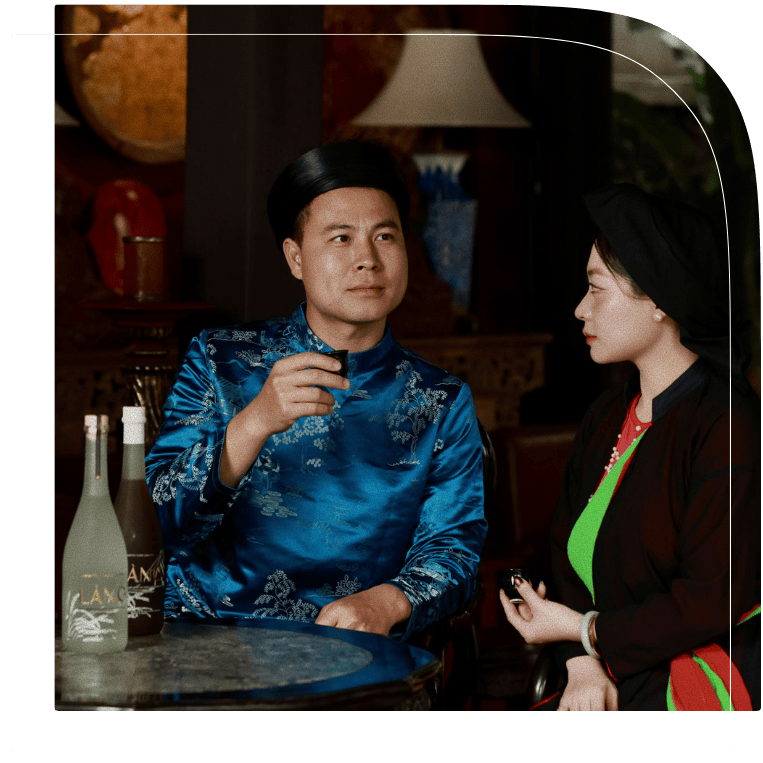
Today, rượu remains a drink of deep cultural significance in Vietnam—present at weddings, ancestral worship, and village festivals. Yet, unlike Japan’s sake, Korea’s soju, or China’s maotai, it has yet to claim a spotlight on the world stage.
